Skip to content
The Lab / About GrupaAI

Building for trillions
of digital workers.

GrupaAI is a Pioneer AI Lab building digital humanoid workers and infrastructure for founders, enterprises, and developers to automate operations and build autonomous businesses.

Multi-screen. Multi-device. Multi-application. Multitasking.

01 / Our thesis

The next infrastructure layer is autonomous work.

The next infrastructure opportunity is to make completed work available on demand. GrupaAI is building digital humanoid Workers and the infrastructure to provision, coordinate, and govern them.

We believe a digital humanoid should be able to work like a human: across multiple screens, interfaces, applications, and devices, with the ability to multitask. The essential property is continuity. The Worker carries the goal, context, authority, and progress as the work moves between environments.

What software left to people

Samuel Ekpe came to this problem through earlier startups, consulting, and running a talent marketplace. Matching someone to a job was only the beginning. Onboarding, coordination, exceptions, and delivery still needed people. Software organized the work; a person carried responsibility for getting it finished.

Our central bet is that this responsibility can become a reusable capability. A Worker should carry a mission across the software a business already uses, without losing its purpose at each handoff. The screen is the deployment surface. The opportunity is the work that crosses it, especially the last mile where an exception can make an otherwise successful workflow unusable.

When a capability becomes infrastructure

History offers two useful precedents. Research on U.S. manufacturing from 1890 to 1940 finds that electrification brought productivity gains alongside investment in equipment and changes in organization. Our inference is that improving a capability and redesigning how work uses it belong together. [1]

Cloud computing changed how capability could be accessed. Amazon's 2006 EC2 launch let developers obtain resizable computing capacity through a web service and pay for what they used. Teams could provision capacity as a service, reducing the need to assemble the underlying infrastructure themselves. [2]

Our thesis brings these two ideas to digital work: redesign execution around capable models, then make that execution available on demand. The analogy has a limit. Provisioning a server supplies capacity; delegating a mission requires a correct result under real constraints. Permission, judgment, recovery, and evidence are central to the infrastructure we must build. History suggests a pattern, not a guarantee that we will reproduce its outcome.

Why this becomes possible now

Stanford's 2026 AI Index reports an OSWorld result of 66.3% by late 2025, with roughly one-third of benchmark tasks still unfinished. That is a snapshot of benchmark performance, not a guarantee of production reliability. Our reading is that useful execution is becoming possible while recovery from failure remains essential. [3]

The economics are moving too. Stanford's 2025 report recorded a more than 280-fold fall in inference cost at GPT-3.5-level performance between November 2022 and October 2024. Cheaper reasoning creates room to spend on checking and recovery. It does not, by itself, make a complete Worker cheap or reliable. [4]

Together, these changes open a specific research and engineering opportunity: turn improving models into dependable work, and measure the full cost of getting the result right.

Work is the opportunity

The infrastructure opportunity is to let people and companies delegate completed work without rebuilding execution for every assignment. Customers need an accepted result, whether they buy it directly or build it into their own product. The value of the tools underneath depends on how reliably and economically they deliver that result.

Work carries responsibility. Errors, missed deadlines, and unauthorized actions have consequences. The useful economic measure is cost per accepted outcome, including execution, verification, retries, external resources, and human intervention. A cheap run that needs expensive rescue is expensive work.

Our ambition is a Worker more capable on defined work than a remote worker, at one-tenth the total cost of comparable skilled labor in the world's lowest-cost regions. That target must be tested at equivalent quality, with the cost of failed attempts included.

One Worker, many environments

A Worker takes the shape of the responsibility it is given. These are overlapping ways to deploy the same foundation, from a phone or desktop to business systems and the cloud.

Personal Worker
A Worker within reach of one person, carrying personal and professional goals across their phone, computer, and services.
AI Coworker
A digital counterpart designed to work alongside a person, carry forward delegated goals with the context and permissions they choose to share, and return results and decisions that need their judgment.
Business Worker
A role inside an organization, working across its applications with the permissions, review, and service standards that role requires.
Outsourced Worker
A specialist engaged for a defined outcome, with clear scope, delivery evidence, and accountability to the customer.
Remote Worker
A Worker operating from the cloud, continuing authorized work across time zones and handing progress back when needed.

We envision a 5 p.m. handoff to an AI Coworker that already carries the goals, progress, and context its human colleague has chosen to share. It could continue authorized work overnight and prepare results, unresolved questions, and decisions for the morning. That continuity is a path toward companies operating 24/7, with people and digital colleagues sharing responsibilities and defined operations becoming autonomous as reliability is demonstrated.

How a Worker becomes infrastructure

Consider a supplier renewal. A Worker may need to read a contract, reconcile an invoice, check a portal, resolve a discrepancy, and request approval before a commitment. The job crosses systems, but its context, permissions, and definition of completion must remain intact. That is the continuity we are engineering.

Different jobs repeatedly need the same foundations: identity, authorized access, persistent state, coordination, recovery, and evidence. Our infrastructure bet is that these foundations can be reused across Workers and roles. A developer should be able to provision a Worker with a mission and boundaries, then inspect progress and results through a shared API.

Revi, a food-ordering startup, asked us for an API. Similar requests came from a consulting firm and YC startups. Those requests shaped our decision to build Worker infrastructure alongside a desktop product. They are early signals of demand for a shared foundation, not proof of a repeatable market.

We start with repeated operational work for founders and teams, with completion criteria a person can review. Momentum provides the direct Worker experience; the Workers API exposes the execution foundation. The path is to deepen reliable missions, extend continuity across environments, and coordinate teams. Each expansion must preserve quality while reducing the attention a person supplies.

The advantage has to compound

Our intended advantage is cumulative operational knowledge: evaluations that catch real failures, reusable recovery behavior, and deployment practices that make the next mission easier to complete. This requires permissioned learning and isolation of customer information. The value should compound through better execution without depending on unrestricted access to customers' data.

That is a hypothesis we must earn. If each new workflow requires the same amount of bespoke engineering or human rescue, the infrastructure thesis weakens. The tests are accepted outcomes, deadline reliability, intervention time, deployment effort, and full delivery cost. Our own results must establish that these improve as the system takes on more work.

From personal teams to business swarms

A person may direct roughly ten Workers for personal life, work, and business. An enterprise may coordinate swarms across many customers and processes. A product may provision Workers when a request arrives. Demand can therefore expand with the number of useful assignments, beyond the number of people buying a software seat.

Using the UN's 2024 population estimate, 8.2 billion people × roughly ten Workers gives about 82 billion Workers. This is an illustrative universal-adoption scenario, not a market forecast. Business swarms and product-directed work motivate our trillion-Worker ambition; they do not yet establish demand or simultaneous usage at that scale. [6]

A workforce becomes a foundation

If dependable digital work becomes programmable, a person can delegate a mission, an enterprise can provision capacity, and a founder can build an autonomous business on the same foundation. The long-term ambition is infrastructure for trillions of Workers, with human authority and evidence of completion built into how they operate.

One trusted Worker is the beginning. Infrastructure that powers the world's work is the company we are building.

Read our visionWhy we are building this

External references

Published sources that inform our thesis. They provide historical, technical, and economic context; they are not GrupaAI measurements.

  1. 1. Electrification and the organization of work

    Fiszbein, Lafortune, Lewis, and Tessada study U.S. manufacturing from 1890 to 1940. They find productivity gains accompanied by investment and organizational changes. We use this as a historical parallel, not evidence for GrupaAI performance.

    NBER · Powering Up Productivity · revised 2024
  2. 2. Computing capacity becomes a service

    The original EC2 announcement describes resizable capacity, web-service provisioning, and usage-based payment. It documents a precedent for infrastructure access, not an equivalence between compute and completed work.

    Amazon Web Services · EC2 launch · 2006
  3. 3. Capability and the unfinished task

    The technical performance chapter surveys computer-use benchmarks through 2025. The OSWorld results cited here are external benchmark results, not GrupaAI measurements.

    Stanford HAI · AI Index 2026
  4. 4. The cost of intelligence

    Historical inference costs at a fixed capability level, including the decline between November 2022 and October 2024.

    Stanford HAI · AI Index 2025
  5. 5. Tasks within jobs

    The ILO's 2025 task-level analysis finds some GenAI exposure in occupations held by one in four workers globally. It expects transformation to be more likely than wholesale replacement. Our inference is to begin with defined tasks and expand responsibility as reliability improves.

    International Labour Organization · 2025 update
  6. 6. Population and the scale scenario

    The United Nations supplies the 8.2 billion population estimate for 2024. Ten Workers per person, business swarms, and the trillion-Worker horizon are our scenarios and ambitions, not findings of the UN.

    United Nations · World Population Prospects 2024

From the Lab

02 / The work

What GrupaAI does

Workspace preview

Workspace

Workspace is our preview of autonomous digital humanoid workers collaborating on shared missions and organization goals for their people, across colleagues, teams, and the company. Your agents work with other people's agents without someone conducting every handoff. Humans are looped in only when judgment or authority is absolutely required.

Infrastructure for autonomous work

Workers API

The Workers API lets developers and enterprises provision digital workers to power products, automate business operations, and build autonomous companies. It brings runtime, sessions, permissions, and execution evidence into an API.

03 / The approach

What makes GrupaAI different

A worker across the digital world

We are building a digital humanoid that works through the computers, phones, tablets, watches, browsers, and applications a person uses. It carries the human’s goal and context across the environments where the work happens.

Multiple screens. Multiple tasks. One mission.

Our architecture is designed for multitasking across screens, devices, and applications. A worker should coordinate parallel tasks, preserve context, and carry a mission forward as work moves between environments.

Engineer for work that never stops

A digital workforce must handle interruptions, changing software, and long-running tasks. Our reliability agenda is continuous, 24/7 operation with recovery, observability, and verification built into the worker runtime.

Make security part of the worker

Our engineering standard puts scoped permissions, protected credentials, isolation, and traceable actions at the foundation. People define the boundaries, approve sensitive work, and retain control as workers take on more responsibility.

Build the economics of a digital workforce

Our ambition is infrastructure that can provision and coordinate trillions of autonomous digital workers for organizations. We work across perception, reasoning, orchestration, and runtime to reduce the full cost of completing work correctly.

Explore the thinking in our Journal and the execution model in the Workers API documentation.

04 / The people

Who uses GrupaAI

We are building the foundation for the next generation of companies: autonomous businesses and organizations powered by digital workers. GrupaAI serves the founders creating them, the developers building their systems, and the enterprises automating their operations.

  • AI founders building autonomous businesses

    Founders creating the next generation of companies: autonomous businesses and organizations powered by digital workers. They build on GrupaAI’s worker infrastructure to turn their business ideas into operating companies.

  • Enterprises automating operations

    Organizations bringing digital workers into their existing operations, from customer systems and internal tools to vendor portals. They need reliable execution, security, oversight, and coordination across teams and systems.

  • Developers building on worker infrastructure

    Engineers creating AI-native products, agent applications, and services. They use the Workers API to provision workers, coordinate execution, and integrate autonomous work into the systems they build.

  • Founders and growing teams

    Founders using Momentum to move customer acquisition, research, hiring, and everyday operations forward. They direct a worker toward a goal while keeping visibility and control over the work.

  • Consultancies and service businesses

    Teams bringing digital workers into repeatable client work. They build services on GrupaAI while retaining the judgment and accountability their customers depend on.

05 / The people behind it

The team behind GrupaAI

Samuel Isidore EkpeFounder & CEO

Samuel Isidore Ekpe

Samuel founded GrupaAI in March 2026, drawing on his earlier startups, consulting work, and experience running the Grupa.io talent marketplace. Working directly with clients, talent, and delivery gave him firsthand insight into human work and the operations that support it.

Samuel on LinkedIn
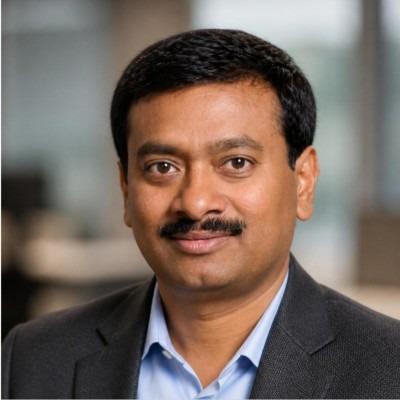
Sid NavelkarHead of Enterprise

Sid Navelkar

Sid has had executive leadership roles at Cognizant, Accenture and Genpact. He brings enterprise leadership experience and deep industry relationships to GrupaAI.

Sid on LinkedIn
Kapil BodkheHead of Engineering

Kapil Bodkhe

Kapil brings 16 years of engineering experience, including roles at Oracle and Cisco. He leads engineering at GrupaAI.

Kapil on LinkedIn
Dev MudaliarInvestor & Advisor

Dev Mudaliar

Dev brings nearly three decades of experience, including Teleperformance and TP.ai. He advises GrupaAI on enterprise services and AI in operations, drawing on longstanding relationships across the industry.

Dev on LinkedIn
Our origin

Software scaled.
The operations still needed people.

An understanding of work, earned by doing it

Before founding GrupaAI, Samuel Ekpe built multiple startups, worked in consulting, and ran the Grupa.io talent marketplace, handling operations, onboarding, and matching. That experience revealed the problem he set out to solve: software could scale, but the operations around it still depended on people doing the work. He founded GrupaAI in March 2026 to build digital humanoid workers and the infrastructure for autonomous businesses.

Build beside the people doing it

We worked onsite with Y Combinator startups during their batches to understand the work they were still doing manually. The first browser and computer workers grew out of those workflows, including early autonomous runs beyond 12 hours.

Learn from production

The work expanded to individuals inside insurance and banking companies. Across 1,583 production iterations reported by our founding team, the focus stayed on the details that make a worker useful in real software: continuity, recovery, permissions, and a completed result.

A desktop worker becomes infrastructure

Revi, a food-ordering startup, asked for an API. Requests from a consulting firm and YC startups pointed in the same direction: developers wanted to build on the worker itself. That demand led us to build the Workers API alongside the Momentum desktop application.

Why a Pioneer AI Lab

Infrastructure for trillions of autonomous digital workers.

Our ambition is to make provisioning digital workers as straightforward as provisioning cloud compute. Organizations should be able to deploy and coordinate trillions of workers across their software and devices, with reliable execution, security, and human oversight built into the infrastructure.

The standard we are pursuing is reliable, secure, 24/7 work: 10× human performance on defined tasks, higher reliability, and one-tenth the total cost of comparable skilled labor in the world's lowest-cost regions. These are research goals, to be evaluated against completed work, its quality, and the full cost of delivery.

The path from one worker to autonomous organizations
The team we are building

Help define the next era of work.

We are recruiting exceptional people in AI, agents, engineering, research, and security. Our ambition is to build the world's best organization for digital humanoid workers: a lab whose research breakthroughs and engineering discipline make reliable, secure work possible at the scale of trillions of workers.

Explore the roles and our interview process
06 / Getting started

How GrupaAI works

  1. Define the work

    Start with an outcome, the systems involved, and what a correct result looks like. Use Momentum for a personal mission, or the Workers API for work inside a product or operation.

  2. Set the boundaries

    Authorize the necessary sessions and tools, set budgets, and decide which actions require approval. For enterprise work, agree the deployment scope and onboarding with our team.

  3. Follow execution and review the result

    Follow the worker's progress, respond when judgment is needed, and inspect the resulting work. Developers can integrate run status, approvals, webhooks, and execution evidence through the API.

For product and deployment questions, email team@grupa.ai or book a conversation. Support arrangements and onboarding depend on the scope of the work.

07 / At a glance

Key facts

Company name
GrupaAI
Type
Pioneer AI Lab
Ambition
Trillions of autonomous digital workers, provisioned on demand for reliable, secure, 24/7 work
Founded
March 20, 2026
Headquarters
San Francisco, California
Office
Palo Alto, California
Field
Digital robotics and autonomous work
Products
Momentum, Workspace (preview), and Workers API
Core offering
Digital humanoid workers and the infrastructure to run and coordinate their work
Worker scope
Multi-screen, multi-device, multi-application, and multitasking
Who we build for
AI founders building autonomous companies, enterprises automating operations, developers, growing teams, and service businesses
Contract terms
Confirm the commercial terms and any service commitments for your product and deployment with our team.
Services
Desktop workers, worker infrastructure APIs, and enterprise deployment support
Website
grupa.ai
Communication
team@grupa.ai
08 / Questions

Frequently asked questions

What is a digital humanoid worker?

A digital humanoid is an AI worker designed to use digital environments the way a person works: across screens, devices, and applications, while coordinating multiple tasks. People set the goals, permissions, and boundaries; the worker carries the mission through the tools and environments the work requires.

How is GrupaAI different from computer use or browser use?

Computer use, browser use, and screen or interface use are capabilities a worker needs to interact with software. We are building the digital humanoid that brings those capabilities together: carrying a goal across devices, applications, and screens, multitasking like a person, and following the work through to a verified result. Our focus is the intelligence, continuity, and reliability of the worker completing the whole job.

Why is the last mile of work our focus?

The last mile is where a workflow meets the exceptions, unfamiliar systems, and changing conditions of real work. Our ambition is a worker that takes the mission to the doorstep—a completed, verified outcome—rather than leaving someone at the station with the final steps still to do. We are building the agent’s ability to handle that complexity, reducing the need for forward-deployed engineers to create a custom workaround for each workflow.

What does GrupaAI mean by digital robotics?

We use digital robotics to describe the engineering of workers that act in software environments. Our focus includes perception, reasoning, action, recovery, and coordination through the interfaces where work already happens.

Should I use Momentum, Workspace, or the Workers API?

Momentum is the personal desktop experience. Workspace previews agents working together, while the Workers API is for developers who want to provision and integrate workers into their own products and operations.

Can one worker coordinate work across devices and applications?

That is central to the digital humanoid we are building: a worker that carries context and coordinates multiple tasks across screens, devices, browsers, and applications. The architecture is designed to support a continuous mission across those environments, with permissions and oversight set by the person or organization directing it.

Does a worker have unrestricted access to my accounts?

No. You authorize the accounts, sessions, and tools used for a mission and set its budgets and approval boundaries. A worker’s authority comes from that delegation.

How do I get started or discuss an enterprise deployment?

Start with Momentum or the Workers API documentation, or contact team@grupa.ai to discuss the workflow. Deployment scope, support arrangements, onboarding time, and any service commitments are agreed for the engagement.

What are GrupaAI’s scale, performance, and cost goals?

Our ambition is infrastructure for trillions of autonomous digital workers carrying out reliable, secure work around the clock. We are pursuing 10× human performance on defined tasks, higher reliability, and one-tenth the total cost of comparable skilled labor in the world’s lowest-cost regions. These are research goals, evaluated against task quality, reliability, completion rate, and the full cost of delivery.